
















Supercharging Healthcare Workflows with Artificial Intelligence Agent Development
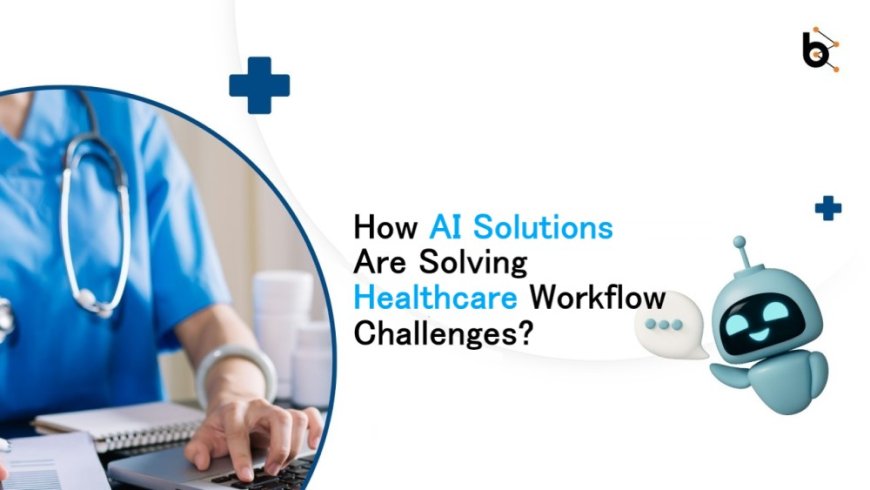
Healthcare institutions struggle with mounting operational pressures. Patient volumes continue to rise while documentation requirements become increasingly complex. Most healthcare organizations rely on manual processes and spend hours on administrative tasks like patient scheduling, insurance verification, and data entry instead of focusing on patient care. When healthcare professionals waste time on repetitive tasks, they fail to deliver better patient care services and risk their reputation.
This explains why healthcare institutions should prioritize workflow modernization through AI agent development. Artificial intelligence agents offer targeted solutions for streamlining administrative tasks and automating routine processes. Unlike traditional automation solutions, AI agents adapt to the dynamic operational requirements of healthcare services providers.
Building Intelligent Healthcare Workflow Agents with AI Development Services
Building reliable AI agents for healthcare operations presents significant challenges for medical institutions. Most healthcare organizations lack the specialized technical expertise required for custom AI agent development. The healthcare industry faces a talent gap when it comes to AI implementation, despite recognizing its potential for operational improvement.
As an alternative, collaborating with an AI solution company for agent development is advisable for healthcare firms.
An artificial intelligence development company brings this dual expertise that most medical institutions cannot develop internally. These specialized partners bridge the technical-clinical divide that often causes in-house development efforts to fail. By hiring dedicated AI developers for agent development, healthcare institutions can ensure:
- Compliant Agent Development - Dedicated developers understand the regulatory landscape that governs healthcare technology. They design AI agents to operate within HIPAA compliance frameworks while ensuring secure patient data handling. These teams automate compliance checks within the agents, reducing the risk of regulatory violations that could result in significant penalties for healthcare organizations.
- Smooth System Integration - Healthcare institutions rely on complex electronic health record systems that require seamless AI agent integration. AI development company specialists excel at connecting agents with existing EHR systems through healthcare-specific protocols and APIs. This integration approach ensures that AI tools work within established clinical environments without disrupting existing workflows.
- Continuous Monitoring and Maintenance - Professional development teams implement continuous monitoring and validation systems that maintain AI agent performance over time. They conduct rigorous testing across diverse patient populations to ensure clinical effectiveness beyond the initial deployment environment. Through ongoing performance monitoring, these teams identify and resolve issues before they impact patient care operations.
Key AI Agents That Developers Build for Healthcare Organizations
Artificial intelligence development services providers design specialized agents that target specific healthcare operational challenges. These intelligent systems support both clinical functions and administrative operations across healthcare institutions.
1. Patient Support and Virtual Health Assistants
Virtual health assistants lead the trend of AI agents in healthcare. Intelligent conversational agents help patients during appointment booking, query resolution, and medication reminder transferrals. Smart assistants developed by an artificial intelligence development company can assess symptoms and let clinical staff focus on complex cases. Natural interaction creates an easy connection between patients and providers.
2. Medical Data Processing
Healthcare generates massive amounts of data every day. AI agents turn raw information into useful insights. These tools pull important details from clinical notes, sort medical images and spot patterns in patient groups. Medical teams can quickly find what they need because AI development teams automate these data-heavy tasks.
3. Clinical Decision Support
AI-powered clinical tools help medical professionals by suggesting treatments based on patient records, symptoms and medical research. These agents enhance clinical judgment by spotting possible diagnoses doctors might miss. The best AI development company solutions merge with existing systems and show relevant information when needed.
4. Hospital Resource Management
Resource optimization is a vital use of healthcare AI. These systems can predict how many patients will come in, create better staff schedules and track critical supplies. They spot potential problems before patient care suffers by constantly analyzing hospital operations.
5. Drug Discovery and Research Agents
AI agents speed up pharmaceutical drug discovery and research. They analyze molecular structures, predict how drugs interact and find promising new candidates. This approach reduces the time and effort associated with manual drug analysis processes, speeding up drug administration for patients.
Key Development Approaches Used by AI Solution Companies for Healthcare Agent Creation
Building healthcare AI agents requires a systematic development approach that combines technical expertise with medical domain knowledge. AI solution companies follow structured methodologies tailored specifically to healthcare environments and regulatory requirements.
I. Understanding the Use Case and Objectives
Medical professionals need AI developers to understand the complete picture of clinical workflows. Teams spend time with healthcare staff, conduct interviews, and identify process bottlenecks. An artificial intelligence development company knows that success depends on clear, measurable goals that match clinical outcomes rather than technical achievements. Medical experts and developers work together to set realistic expectations and timelines.
II. Data Collection and Annotation
After setting objectives, teams gather datasets from various clinical scenarios. This process includes accessing de-identified patient records, imaging data, and clinical notes while following privacy regulations. Medical experts transform raw healthcare data into structured information that AI models can process. Their clinical expertise helps label medical anomalies, symptoms, and treatment outcomes correctly.
III. Selecting the Right Models for Agent Development
Model selection plays a crucial role in development. Teams consider factors like interpretability, accuracy, and computational needs. Healthcare applications need transparent AI systems that help medical professionals understand the reasoning behind recommendations. Leading AI development companies adapt existing frameworks to address specific healthcare challenges instead of using generic solutions.
IV. Validation and Testing
Thorough validation serves as the lifeline of healthcare AI development. Teams assess systems with patients of all types to prevent bias and ensure reliable performance. Testing moves from controlled environments to real-life clinical settings under supervision. Successful developers use continuous monitoring systems that track performance after deployment. This allows teams to refine the system as medical practices change.
Final Words
Healthcare AI agent development represents a strategic investment in operational excellence and patient care quality. Artificial intelligence development companies serve as essential partners for healthcare institutions seeking to modernize their workflows and eliminate administrative bottlenecks. These specialized partnerships produce solutions that address the unique operational challenges encountered by modern healthcare organizations.