















Hybrid vs. Virtual vs. In-Person: Which Event Format Should You Plan for 2025?
Compare hybrid, virtual, and in-person event formats to find the best fit for your 2025 plans. Discover pros, cons, and tips for smarter event planning.

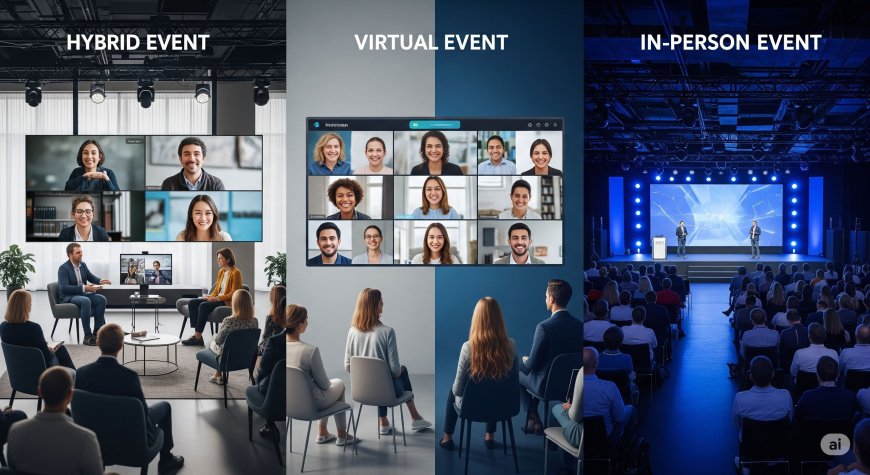
With the start of another year and the growth of technology, questions are bubbling in the minds of event planners. Like, what event strategy is on the rise of becoming the next big thing? Are In-person events dead due to the rise in virtual events? Will we use holograms in place of people? As the metaverse continues to develop, this last question may become possible, but it remains far in the future. The COVID pandemic has forever changed the event industry, and event organizers are stuck in the limbo of Hybrid vs Virtual vs In-person. Whatever shall they do? Fear not, as in this blog, we will uncover The event format for 2025. Let us begin by defining all three types of events one by one:
In-Person Events
The unique selling point of In-person events is the human connection, which cannot be lost, no matter how many technologies come and go. It is and will remain irreplaceable. And though this gap was thought to be bridged by the introduction of virtual events, networking will always be much more valuable when done in person. In-person events give people an opportunity to connect on an unmatched personal level. Some characteristics of In-person events are as follows:
Branding Opportunities: Physical events can bring creativity to branding through signage, decor, and event design.
Human Connection: Nothing can replace face-to-face interaction, which builds stronger relationships.
Immersive Experience: From live demonstrations to networking opportunities, in-person events offer a more engaging environment.
Virtual Events
Virtual events have gained a lot of popularity in recent years due to the pandemic and the growing technological spread. After COVID, the world had to shift online, and so did events. In a post-pandemic world, event organizers consider virtual events to be a must-have event strategy. Virtual Events include the following benefits:
Global reach: With the option of being live-streamed or broadcast to the event attendee list. Virtual events have a wider reach as compared to In-person events.
Engagement tools: Virtual platforms offer tools like Q&A, live polls, chat rooms, and breakout sessions to foster engagement.
Cost efficiency: Removing venue, catering, and travel expenses can significantly minimize the costs of these events.
Eco-friendly: As the name suggests, virtual events are online and thus reduce carbon emissions in turn being eco-friendly.
Hybrid Events
Hybrid events are a blend of online and real-world setups. This allows event planners to easily serve audiences no matter where they are. These events generally take place at a physical location for those who can join in person, and they also offer online access, like a conference or webinar, for those who cannot attend physically. Hybrid event management software handles both aspects. Below are some features of hybrid events:
Flexibility: Your event can be experienced both online and offline, and that gives you flexibility as an organizer to accommodate every attendee in every possible way.
Enhanced interaction: With the virtual as well as In-person modes combined, you can employ interactive elements of both in your event. This way, you can ensure attendees do not lose out on any interaction.
Greater Audience Reach: Blending in-person and virtual participation allows you to engage both local attendees and those who cannot travel.
Cost Considerations: Hybrid events minimize costs by limiting venue size while expanding reach online.
Planning for 2025
In the year 2025, we are looking at a rise in hybrid events, which blend both online and in-person components. The online aspect of these events is taking precedence, with organizers prioritizing the virtual audience.
But those attending in person can expect some changes designed specifically for them. Organizers may try to provide attendees with unique or upgraded elements limited to only those who attend physically. This could include exclusive access to certain speakers, enhanced networking opportunities, or interactive experiences. The goal is to make the live experience feel worthwhile and distinct from the virtual one, providing an incentive for people to attend in person.
The move to hybrid events with a virtual-first mindset shows that the world has changed. The special upgrades for the in-person audience are meant to help keep a balance. The features made for the people at the event will likely change, and event planners will try new ideas to engage and please their crowds.
In Summary
2025 is a year of change and creativity in the events sector. Hybrid events are set to become even more common, with a focus on providing great experiences for both virtual and in-person participants. Make sure that you curate a shared experience for both the online and offline participants; otherwise, your hybrid event will not be successful.
Selecting between different types of events (such as virtual, hybrid, or in-person formats) depends heavily on your event goals, audience, and resources. Virtual events are great because they're accessible and save money. Hybrid events help you reach more people and are flexible. In-person events give you a deeper, more engaging feel. By aligning the event type with your strategic objectives, you can ensure your event not only meets but exceeds your expectations.